
1. Dodge the apples at the market
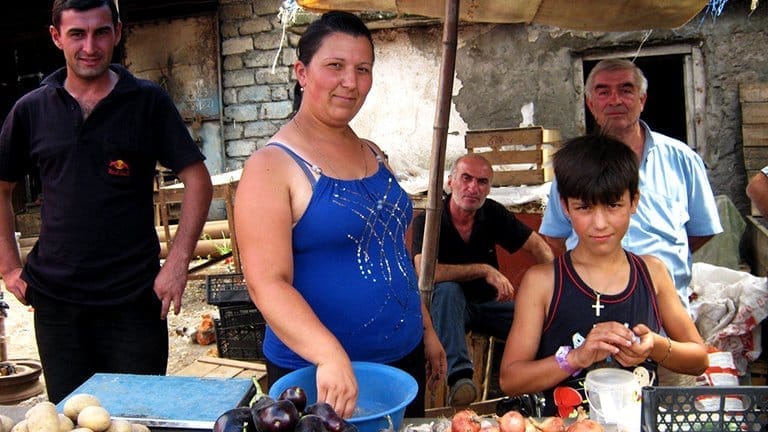
One of the things I enjoy most in Tbilisi, are the big food markets. They remind me of the markets in Sicily, with the farmers from the country-side and their fruits and veggies full of colors. Fruits and veggies are not the only colorful things in the market… sometimes the seller’s reactions are even more colorful, to say the least.
Being a foreigner in a different culture and without speaking the local language, I am sure it can be easy to be unwillingly offensive in Georgians’ perception. Still, some reactions I encountered were genuinely funny.
Once, me and my wife were buying fruits at the market, and while asking for the price of apples – the seller might have misinterpreted our questions – she got very upset.
The woman took some apples, and prepared to throw them after us, if we didn’t leave.
For me it was refreshing. I prefer a thousand times this harsh and direct attitude to – for example – the passive-aggressive politeness which is so common in Germany, where people will never confront you directly for a problem, but you can easily expect them to send you an email with their polite complaint the very next day.
2. Ara ara
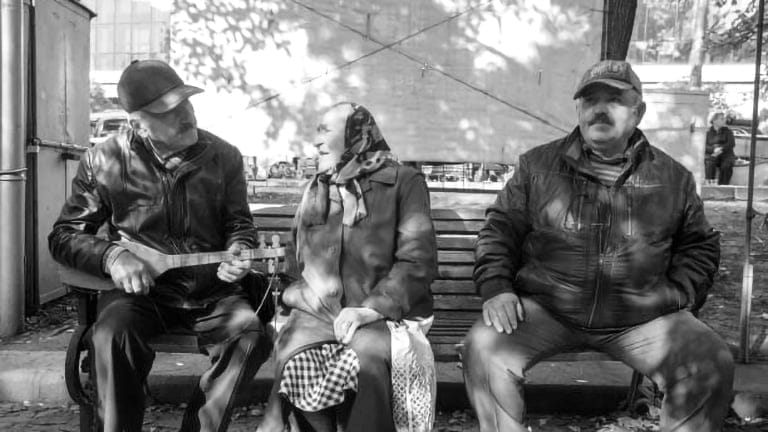
In Italy, it’s easy to overhear in the streets other people’s small talks, and if someone is telling a story, the listeners usually acknowledge them answering “yes… yes”, “okay”, “I understand” and so on.
Not in Georgia: meet “ara ara“.
“Ara” in Georgian means no. In the same small-talk situation above, in Georgia the listener keeps repeating “ara ara”. From their demeanour it’s obvious that the talk is friendly and that they are agreeing, so it sounds to my ears like they use “ara ara” (no no) the same way we use “yes yes” as sign that they are listening.
To date, I still can’t wrap my head around why people would keep repeating “no no” to someone who is talking. Nor I found a satisfying answer, the few times I asked a Georgian I just received a polite smile in return…
3. Taxi drivers
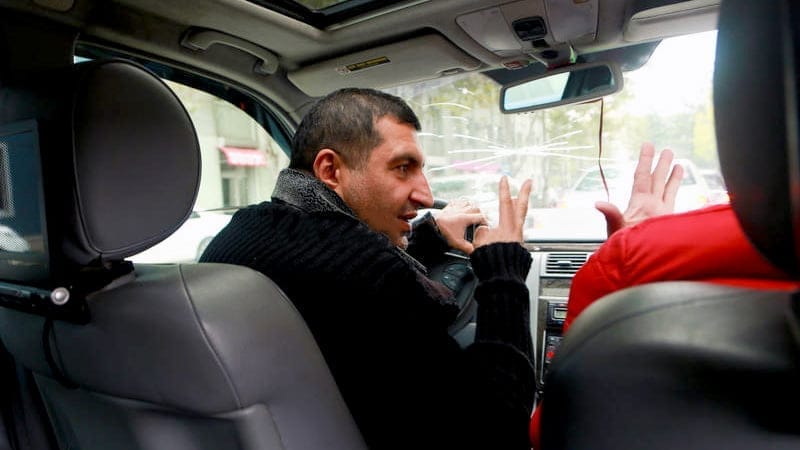
If you need a taxi, it’s a no-brainer nowadays. You order the taxi, the driver comes pick you up at your address and brings you to destination, right? Well, not always.
I must say that in Georgia taxis are very cheap compared to European standards, and with the price of a bus ticket you can easily move around the city. But the saying “You get what you pay for” is more appropiate than ever as well.
Let’s start with my naive assumptions when I arrived in Georgia:
1. I assumed an address is a precise location
Not when you order a taxi. No matter where I am and how little traffic there is, the driver will park 50 meters back or 50 meters further. Even on roads with plenty of parking space, they still let you walk just a little. I am not sure why, maybe it’s just a reminder of who is the boss of the car.
2. I assumed that everybody can drive (well)
After one year of taking with my wife the taxi in Tbilisi, I would summarize our experience in: 1) days we are lucky and 2) days we are not lucky.
When we are lucky, the driver might just bump into all holes of the streets until our destination, slowly, sistematically, one by one, until we get seasick.
When we are not lucky, we might find drivers who think it’s a good idea to unload their personal frustrations of a lifetime on the street, driving like there is no tomorrow, and swearing at the other drivers for not letting them commit 20 infractions/hour.
My take on this? We are still alive, so all is good.
4. Cats and dogs
In case you don’t know, Georgia is classified in Western countries as “rabies-risk” country for importing pets, for example to bring a cat in EU from Georgia requires more burocreaucy than getting a Visa.
But if you live in Tbilisi, you realize soon that reality is different. All stray dogs are vaccinated and have a yellow chip on the ear as sign of their status. Still, it’s another aspect that surprised me the most.
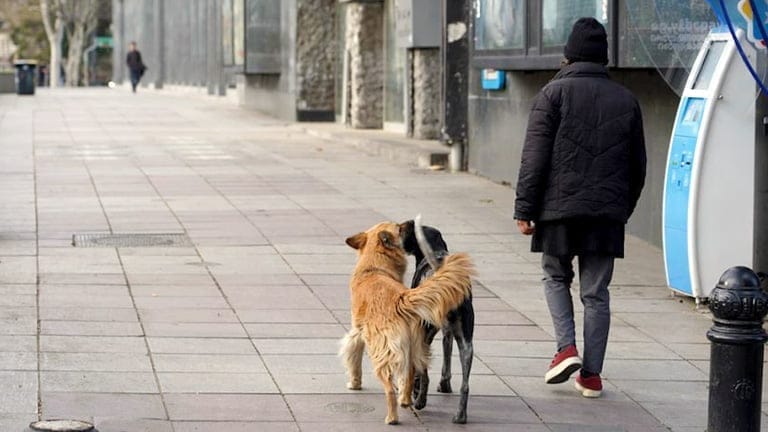
If you walk in the streets, stray dogs might follow you for 10 minutes, just to have a walk together.
Initially I thought they were asking for food, until I realized that they enjoy staying around friendly strangers. They are not scared nor aggressive – sign that they are treated well – and are in tune with the people inside the city. In the morning, women bring leftovers to cats and dogs. In the winter some store owners let a dog inside the shop to shelter from the cold, and nobody complains about it.
5. EU is trendy
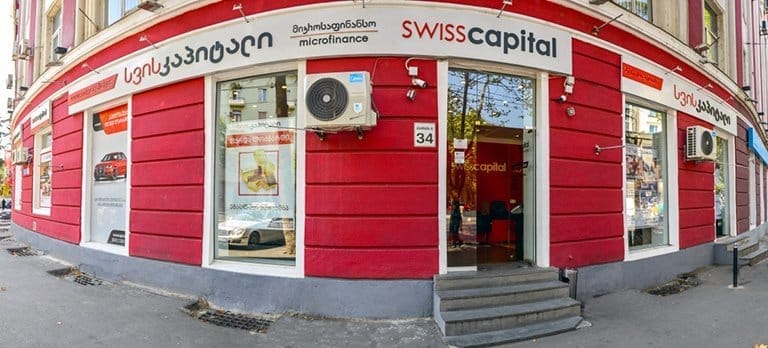
Many Georgians fancied Europe a few yers ago, and longed to enter the European Union. The sentiment is still reflected in the way businesses tried to attract new customers, leveraging the positive perception Georgians have about EU… sometimes to a stretch.
SWISSCAPITAL, AMERICAN HOSPITAL, SOFTSWISS, DEUTSCHE PHARMACY (the only European) are just a few examples of the popularity of Western-sounding names, despite most of them being Georgian companies. How effective this strategy has been, I can’t tell.
6. Tight street competition
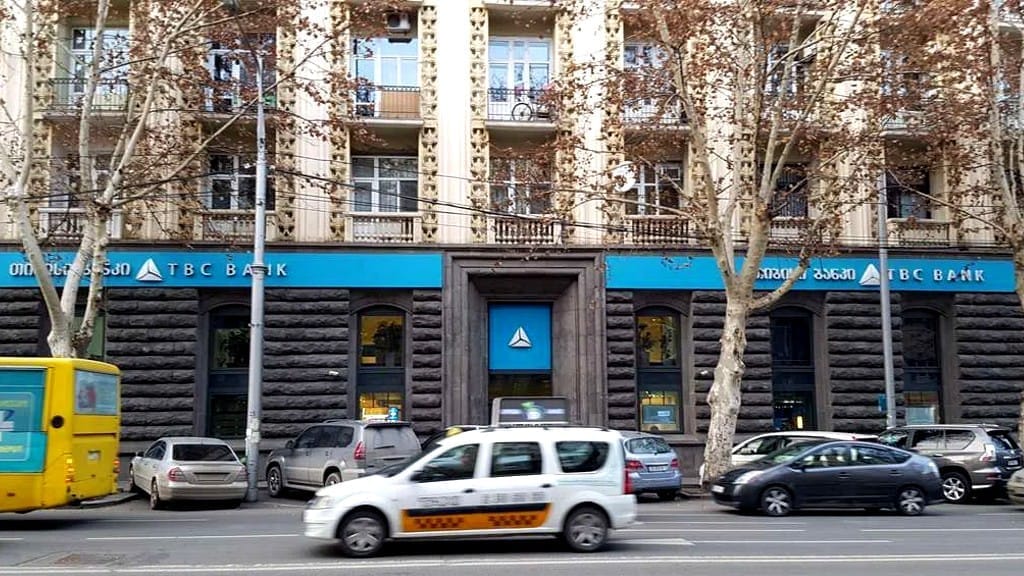
In Tbilisi, if you are looking for a bank, a pharmacy, or a mobile store, you’ll find plenty of them.
When I say plenty, I don’t mean in the city in general, but in the very same street.
Take the major banks in Tbilisi for example, about five brands, in Tsereteli Ave you can find them at intervals of 100 meters on both sides of the street. And every 50 meters you’ll find a pharmacy with the slogan “more than just a pharmacy”. Let’s not talk about Station Square, there are 50 small mobile stores in a row literally next to each other, on the same street.
In case you think I am exagerating, in Tsereteli Ave they added more pharmacies next to each other, which now makes “more than just a pharmacy every 25 meters”.
7. For-Smoker signs
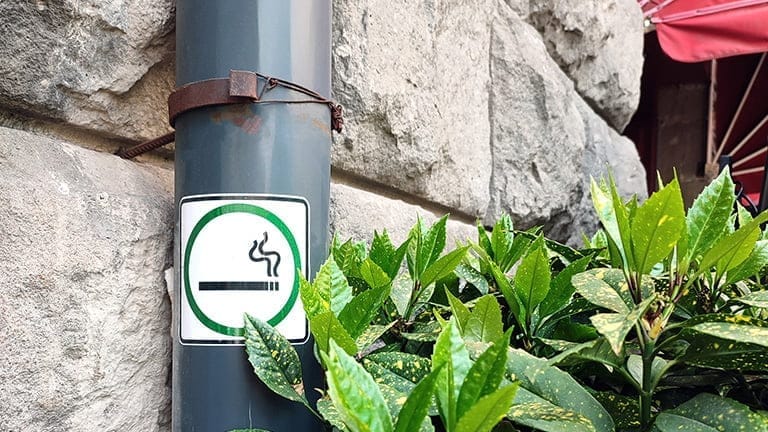
It’s long time I didn’t see for-smoker signs in any country. Well, I am a smoker, so I definitely can’t complain on this one…
Long story short
You can interpret the examples above in a more or less positive light, depending on your origin culture and values. Personally I enjoy them as expression of a culture that has still remained authentic, and honestly, they make me also think that Europe is overrated… I like Georgia.
And by the way, if you wonder how I managed my stay in Georgia without knowing the language, this is the man.